
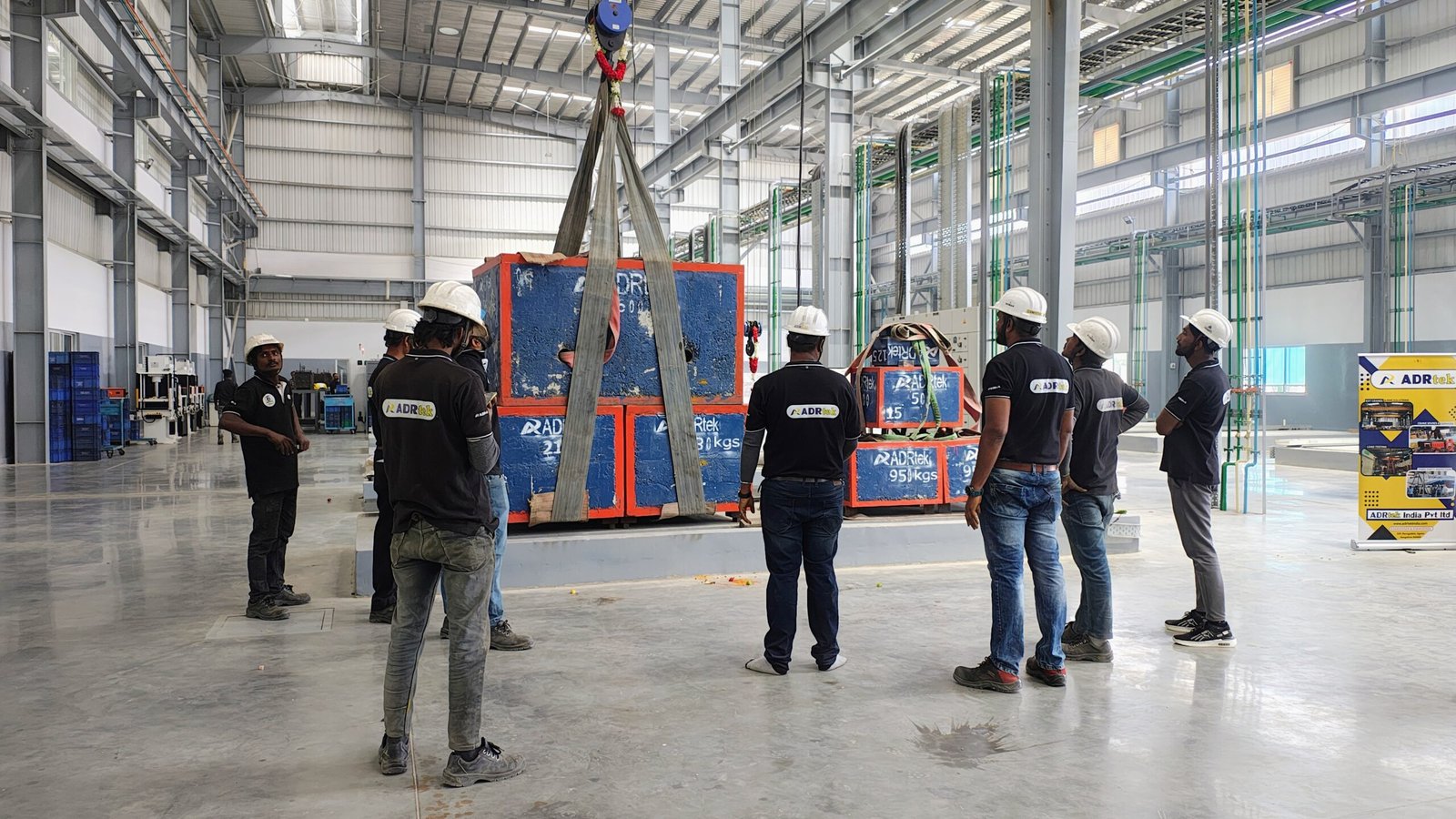

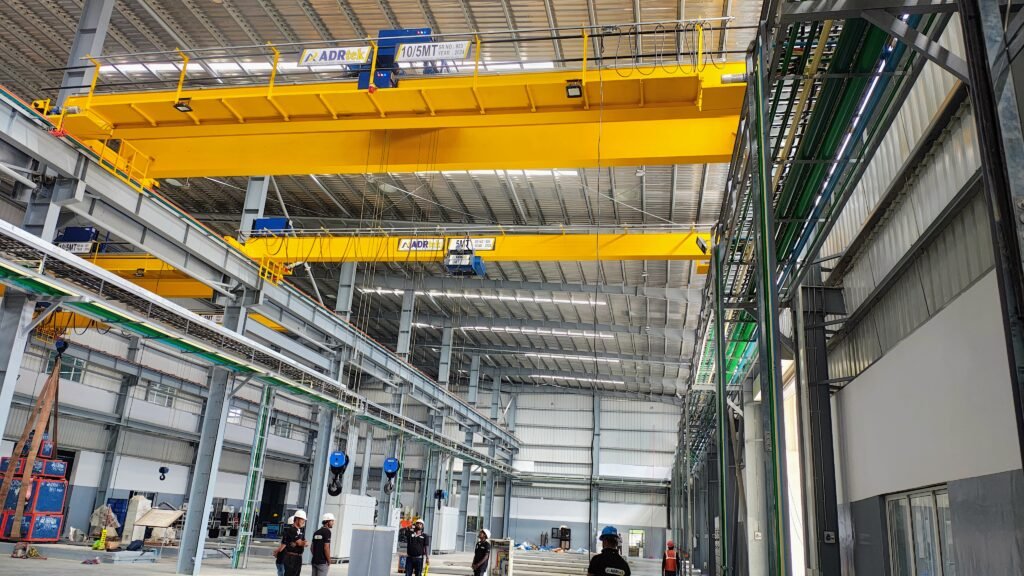
An EOT (Electric Overhead Traveling) crane is a powerful and indispensable piece of machinery in the industrial world, engineered to lift and move extremely heavy loads with precision. It operates on an overhead runway system, allowing it to cover a vast rectangular area within a facility, making it a cornerstone of modern manufacturing, warehousing, and heavy industry.
These electrically powered cranes eliminate the need for floor-based mobile cranes, freeing up valuable floor space, reducing operational clutter, and significantly enhancing safety and efficiency in material handling.
The Anatomy of an EOT Crane: Core Components Explained
Understanding an EOT crane begins with its fundamental components. Each part is meticulously engineered to work in synergy, providing robust and reliable lifting power.
- The Bridge: This is the primary structural component that spans the width of the workspace. It consists of one or two main girders and is the element that travels along the runway.
- Girder: The main horizontal beam of the crane bridge which supports the trolley. The design of the girder—typically an I-beam or a box-girder fabrication—is critical for the crane’s load-bearing capacity.
- End Trucks: Located at both ends of the bridge, these house the wheels that the crane travels on. The drive mechanism within the end trucks propels the entire bridge up and down the length of the runways.
- The Hoist and Trolley: This is the heart of the crane’s lifting function.
- Hoist: The mechanism that performs the actual lifting and lowering of the load. It comprises an electric motor, a gearbox, a brake, a rope drum, and wire rope or chain.
- Trolley: The unit that moves the hoist horizontally across the bridge girder, allowing for precise positioning of the load from side to side.
- The Runway System: This is the track on which the entire crane system travels. It consists of runway beams (often part of the building’s support structure) and rails, providing a fixed path for the crane’s longitudinal movement.
- Controls: The interface for the operator. Modern EOT cranes use advanced control systems for safety and precision.
- Pendant Control: A handheld control box that is suspended from the hoist or trolley, allowing the operator to walk alongside the load.
- Radio Remote Control: A wireless controller that offers greater flexibility and safety, enabling the operator to manage the crane from a distance with a clear vantage point.
- Cabin Control: For high-volume, heavy-duty applications, a dedicated operator cabin is attached to the crane, providing a controlled environment and the best possible view of the operation.
Types of EOT Cranes: Which One is Right for Your Application?
EOT cranes are not a one-size-fits-all solution. Their design varies significantly based on the required lifting capacity, span, and the nature of the facility.
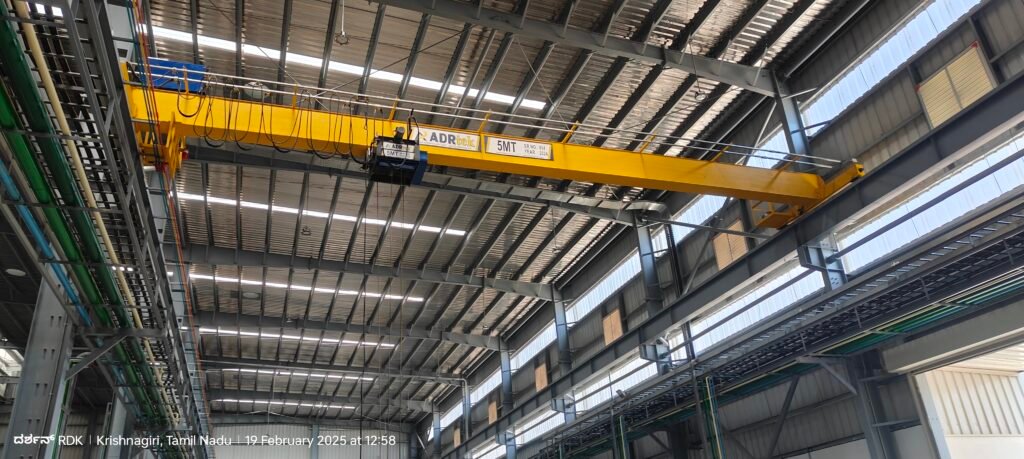
Single Girder EOT Cranes
Ideal for light to medium-duty applications, these cranes feature one main bridge girder. They are generally more cost-effective and have a lighter dead weight, which reduces the structural load on the building. Their compact design makes them perfect for workshops, light assembly plants, and warehouses where the maximum capacity needed is typically under 20 tons.
- Advantages: Lower cost, lighter weight, faster installation.
- Best For: Maintenance workshops, storage facilities, and light manufacturing.
See our selection of Single Girder Cranes to find the perfect fit for your needs.
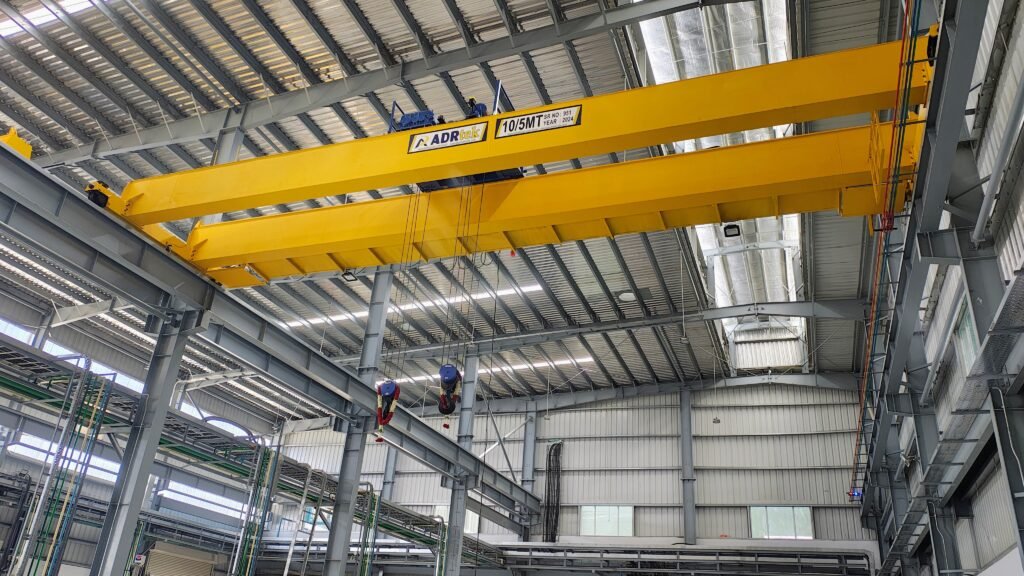
Double Girder EOT Cranes
The workhorse of heavy industry. Featuring two main bridge girders, these cranes are engineered for high-capacity and wide-span applications. The hoist trolley runs on rails on top of the girders, which provides a significant advantage in hook height (the distance you can lift the hook above the floor). They are the go-to solution for steel mills, large machine shops, power plants, and shipyards.
- Advantages: Higher load capacity (up to 500 tons or more), greater span, faster lifting speeds, and better hook height.
- Best For: Steel manufacturing, heavy fabrication, power generation plants, and major construction projects.
Discover the power of our Double Girder Cranes
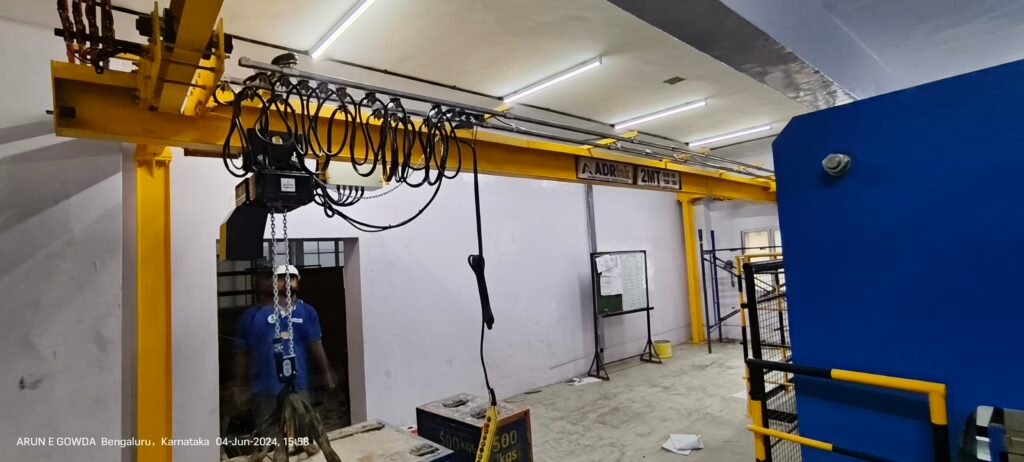
Underslung EOT Crane
An Underslung EOT Crane, also known as an underhung or under-running crane, is a type of electric overhead crane where the bridge travels on the bottom flange of the runway beams. Unlike top-running cranes that rest on top of the runway, this entire system is suspended from the building’s ceiling structure, making it a perfect solution for facilities with limited headroom.
How It Works?
The defining feature of an underslung crane is its method of travel. The crane’s end trucks are designed to hang below the runway beams, with wheels that move along the lower edge of the beam. This suspension from the ceiling allows it to cover the entire work area without needing floor-mounted support columns.
Movement is achieved in three directions:
- Longitudinal Travel: The entire crane bridge moves along the length of the runway beams.
- Lateral Travel: The hoist and trolley unit moves from side to side across the bridge girder.
- Vertical Travel: The hoist lifts and lowers the load.
Key Advantages
- The design of an underslung crane offers several distinct benefits:
- Maximizes Floor Space: By eliminating the need for support columns, it keeps the factory or warehouse floor completely clear of obstructions.
- Ideal for Low Headroom: It is the go-to solution for buildings with low ceilings where a top-running system would not be feasible.
- Building-Wide Coverage: The runways can span the entire width of a building, and multiple cranes can operate on the same system. Interlocking systems can even allow a hoist to be transferred between crane bridges in adjacent bays.
- Cost-Effective Installation: It can often utilize the existing roof structure for support, which can reduce installation costs compared to systems that require a separate foundation and column structure.
Critical Safety Features of EOT Cranes
Safety is paramount in overhead lifting operations. EOT cranes are equipped with multiple safety features to protect personnel, the load, and the equipment itself. Compliance with safety standards like those from [Link to OSHA or relevant local safety authority website] is mandatory.
- Limit Switches: These prevent over-traveling of the hoist (over-hoisting) and the trolley and bridge. Upper and lower limit switches stop the hook from crashing into the drum or the floor.
- Overload Protection: A crucial system that uses load cells to detect if the crane is attempting to lift a weight exceeding its rated capacity (Safe Working Load – SWL). It prevents the lift from proceeding, avoiding catastrophic failure.
- Emergency Stop Buttons: Prominently placed on control devices, these buttons can immediately cut power to all crane functions in an emergency.
- Brakes: Cranes are fitted with robust braking systems, often electromagnetic, to hold the load securely in place even in the event of a power failure.
- Warning Systems: Horns and flashing lights are used to alert personnel in the vicinity that the crane is in operation.
Applications Across Industries
The versatility of EOT cranes makes them essential in a vast range of sectors:
- Manufacturing & Engineering: Moving heavy dies in stamping plants, positioning large components in assembly lines, and transporting raw materials.
- Steel Industry: Handling everything from scrap metal and molten ladles to finished steel coils and plates.
- Automotive: Lifting and moving vehicle chassis, engine blocks, and assembly components down the production line.
- Warehousing & Logistics: Loading and unloading heavy freight from trucks and efficiently managing inventory in large-scale storage facilities.
- Power Generation: Essential for maintenance in power plants, used to lift and position heavy turbines, generators, and other critical equipment.
- Shipbuilding: Moving massive hull sections and other large components during the ship’s construction and repair.